
Expert Dental Implant Care at CLINIC NAME* in CITY* STATE*
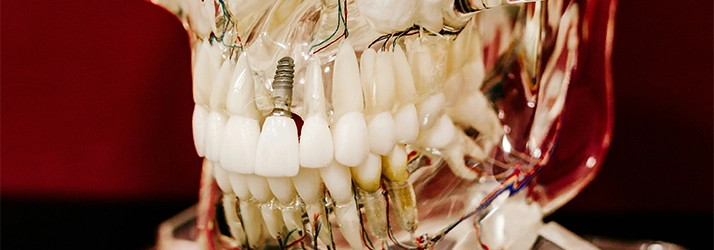
The dental implant clinic at CLINIC NAME* in CITY*, STATE* focuses on precise treatment outcomes, patient education, and long-term oral health preservation. The practice led by FULL NAME* provides advanced implant dentistry services that restore tooth function, maintain oral health, and enhance comfort for patients with tooth loss. Dental implants offer a reliable, modern solution for tooth replacement, planned through a detailed assessment of each patient's clinical needs. Implant services at CLINIC NAME* combine advanced diagnostics, customized treatment planning, and specialized care to deliver safe, predictable results.
Understanding Dental Implants
Dental implants are permanent tooth-replacement solutions that function as artificial tooth roots placed in the jawbone. The implants function as a secure base that supports both dental crowns and dental bridges. The implants use biocompatible materials that enable them to bond with adjacent bone tissue and form a sturdy, permanent support structure.
Dental implants function as fixed dental replacements that patients can use without removing them from their mouths. This technology helps maintain proper bite alignment without adding stress to surrounding teeth. Dental implants help preserve bone structure, which tends to degrade when teeth are missing for an extended period.
Advances in implant dentistry have made dental implants one of the most dependable options for replacing missing teeth today. Dentists who design and place implants in their dental practices can achieve results that mimic the natural function of tooth roots while enhancing overall dental stability.
Why Dental Implants Are Recommended?
- Long-Term Tooth Replacement Solution
Dental implants have gained recognition as a long-lasting solution due to their durability. Implant design allows them to withstand normal biting and chewing forces for many years after placement. The positioning of restorations within the jawbone plays a key role in their ability to remain intact and functioning.
With proper oral hygiene and regular dental visits, implants can maintain long-term function without frequent replacement. The system provides an efficient tooth replacement solution that remains trustworthy over time.
- Preserving Jawbone Structure
Dental implants offer their greatest benefit by helping maintain the density of jawbone tissue. When a tooth is lost, the bone beneath it may begin to resorb due to a lack of stimulation. Dental implants help prevent bone resorption by transferring normal chewing forces to the jawbone, preserving bone density.
The preservation of bone structure serves two functions because it helps maintain facial symmetry while preventing the displacement of remaining teeth. This creates a stable dental foundation that patients can rely on long-term.
- Independent Support Without Affecting Adjacent Teeth
Dental implants function as independent systems that provide their own support without relying on neighboring teeth. The method of dental bridgework necessitates altering the surrounding teeth because it requires attachment to nearby dental structures. Dental implants maintain the surrounding tooth structure, helping patients avoid unnecessary dental procedures and preserving their oral health.
Types of Dental Implant Solutions
- Single-Tooth Implants
The procedure of single-tooth implants allows dentists to replace a single missing tooth in a patient's dental arch. Once the implant is securely integrated, a custom-fitted crown is placed to restore the appearance and function of the missing tooth. The method enables full operational restoration of the affected area while maintaining the correct dental spacing and alignment.
The design of single-tooth implants enables them to match the size, shape, and alignment of existing teeth, allowing for a seamless transition into the dental arch.
- Multiple-Tooth Implant Solutions
Dental implants enable dentists to place artificial tooth roots that serve as support for fixed dental bridges when multiple teeth need replacement. This approach uses fewer implants while still providing strong, stable support.
The multiple-tooth implant solutions help evenly spread chewing forces, resulting in greater patient comfort while lowering the risk of damage to their remaining teeth.
- Implant-Supported Full Arch Restorations
Dentists use implant-supported restorations to create stable tooth replacement solutions for patients who have lost most or all of their teeth. A full-arch restoration uses a series of implants as its foundation, providing better stability than removable dental solutions.
The solution enables patients to regain the ability to bite forcefully while maintaining proper oral balance, preventing their teeth from moving during normal activities.
The Dental Implant Process at CLINIC NAME*
- Initial Consultation and Evaluation
The clinic initiates the dental implant procedure with a total evaluation session at CLINIC NAME*. During the initial visit, FULL NAME* reviews the patient's dental condition, medical history, and treatment goals. The step identifies potential problems while helping to select the best dental implant method.
The dental implant consultation process establishes open communication, enabling patients to understand all aspects of their treatment, including timeframes and expected outcomes.
- Advanced Diagnostic Imaging
The success of implant planning depends on advanced imaging technology. The CLINIC NAME* clinic uses cone-beam computed tomography (CBCT) to create three-dimensional images of the jaw and its surrounding structures. These images provide precise measurements of bone volume, density, and important anatomical structures.
The CBCT imaging system improves accuracy by identifying optimal implant sites, leading to better surgical outcomes and fewer complications.
- Customized Treatment Planning
Each implant treatment plan requires custom development to match the unique needs of each individual patient. The planning process considers three main factors: the condition of the bone, the distance between teeth, and the requirements for tooth restoration. The process of personalized planning results in predictable outcomes that maintain implant stability throughout time.
Implant Placement Procedure
The dentist uses specific surgical methods developed to achieve precise control. The treatment plan for the patient requires a complete evaluation before proceeding to the next step, which will determine the best location for implant placement based on existing bone density, anatomical features, and restoration objectives. The success of the implant procedure relies on this planning stage, which helps reduce potential risks.
The procedure involves placing the implant post into the jawbone at a carefully planned angle and depth. This precise positioning guarantees correct bite alignment, and the implant will be able to withstand regular chewing pressure after its restoration. Advanced techniques are used to preserve surrounding bone and soft tissue, promoting healthy healing and integration.
The implant requires a period of healing to enable its natural fusion process with the surrounding bone. The process of osseointegration establishes a strong, permanent base that supports the upcoming restoration. Osseointegration takes several months to complete because it creates a structure that mimics the natural tooth root's behavior. The medical team monitors patients during this period to assess their implant recovery.
Restorative Phase of Implant Treatment
The process of restorative treatment begins when the healing stage ends and the implant has achieved a successful bond with the jawbone. This stage focuses on completing the implant by attaching a custom-designed restoration to the implant post. The restoration is carefully fabricated to match the patient's bite dynamics and overall oral structure.
The restoration process involves precise measurements and detailed planning to ensure that the final result fits securely and functions efficiently. The restoration is designed to evenly distribute biting forces, maintaining stability for the implant and surrounding teeth. The system includes special design elements that require precise alignment and occlusal functions that enhance user comfort during normal activities, including chewing and speaking.
The restorative phase requires strict adherence to detail because it affects how well the implant functions in the future. Proper fit and balance reduce unnecessary stress on the implant and surrounding structures. Once completed, the implant becomes a fully functional part of the patient's oral system.
Technology Supporting Implant Dentistry
Modern implant dentistry relies on advanced technology to improve precision, safety, and treatment outcomes. The implant procedures at CLINIC NAME* utilize technology throughout their entire process, from diagnosis through placement and restoration.
- CBCT Imaging for Precision Planning
Cone-beam computed tomography (CBCT) provides detailed three-dimensional images of the jawbone, teeth, and surrounding structures. The advanced imaging system provides precise measurements of bone volume and density, as well as the exact location of anatomical structures. CBCT technology helps determine optimal implant placement while identifying potential surgical challenges in advance.
The process of implant placement becomes highly accurate with CBCT imaging, resulting in fewer surgical complications and better treatment outcomes. The technology enables teams from both surgical and restorative disciplines to create shared treatment plans.
- Digital Radiography
Digital radiography provides a method for capturing high-quality images that require less radiation than traditional imaging techniques. The imaging system provides instant access to all images, enabling fast diagnosis and simultaneous treatment planning. Digital radiographs are used throughout the implant process to assess healing progress and ensure implant stability.
The ability to store and review images electronically supports continuity of care and long-term monitoring.
- Modern Surgical Techniques
The surgical techniques of today focus on achieving surgical precision while using minimal tissue damage and enabling physicians to maintain postoperative healing control. The methods have been created to improve patient comfort while enabling fast recovery and maintaining successful implant integration. The use of refined surgical protocols helps ensure consistent outcomes across a wide range of implant cases.
Patient Comfort and Sedation Options
Patient comfort is an important component of implant care at CLINIC NAME*. The dental clinic offers sedation dentistry options to help patients stay calm during implant procedures. The dental team selects sedation methods after assessing the patient's medical history, procedural requirements, and personal comfort preferences.
Sedation helps patients remain relaxed and comfortable during treatment. The dental team monitors patients closely throughout treatment to ensure safety and comfort at all times.
Post-Procedure Care and Monitoring
After implant placement, patients receive detailed post-procedure care instructions designed to support proper healing and long-term success. The instructions include information on maintaining oral hygiene, which activities the person should avoid, and which foods to eat during their healing period.
The dental team will schedule follow-up appointments to track the healing process and assess how well the implant has integrated into the patient. The dental team will evaluate the implant site during these visits to promptly resolve any problems that arise. Ongoing professional monitoring is essential for maintaining implant stability and addressing potential issues early.
Consistent follow-up care ensures that implants continue to function effectively as part of the patient's oral health plan.
Scheduling a Dental Implant Consultation
Patients who want dental implants should contact CLINIC NAME* to book their consultation appointment. During your consultation, the dental team will evaluate your oral health, discuss your goals, and develop a personalized implant treatment plan.
Schedule your consultation today by calling (000) 000-0000.

OFFICE HOURS
Monday
9:00am - 6:00pm
Tuesday
Closed
Wednesday
9:00am - 7:00pm
Thursday
10:00am - 5:00pm
Friday
Closed
Saturday
Closed
Sunday
9:00am - 2:00pm

CLINIC NAME*
ADDRESS*
CITY*, STATE* ZIP*